
Gangs of Wasseypur Explained: When Revenge Stops Being Personal and Becomes Culture
Some movies tell a story. Gangs of Wasseypur
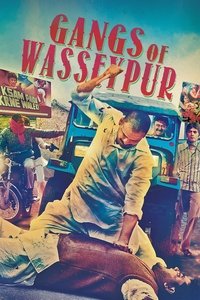
View on FlixLibrary
This isn’t a crime film. It’s a family album of violence, passed down like property. Fathers don’t leave behind land or money here, they leave behind enemies. And sons don’t grow up choosing who they want to be, they inherit who they’re supposed to kill.
By the time the movie ends, you don’t feel like you watched a story. You feel like you survived a lineage.
Violence as Inheritance, Not Impulse
Most revenge films begin with a trigger, a death, a betrayal, a loss. Gangs of Wasseypur begins with something far scarier: tradition.
Here, violence isn’t emotional. It’s procedural. Routine. Scheduled.
Children grow up watching grudges the way other kids watch cartoons. By the time they’re old enough to hold a gun, they already know who they’re supposed to point it at, not because they hate them, but because history demands it.
This turns revenge from a reaction into a ritual. And once revenge becomes ritual, it stops asking moral questions. It just continues.
That’s what makes the film unsettling, not the blood, but the normalcy of it.
Power Isn’t the Goal. Survival Is.
Every character wants power. Every character reaches for control.
And every character looks miserable once they get it.
Power in Wasseypur doesn’t come with peace. It comes with insomnia, paranoia, and the constant fear that someone is coming, because someone always is.
The film quietly dismantles the fantasy that power equals freedom. Instead, it shows us something brutal: power is just another prison, with better furniture.
No one in this world gets to rest. The throne has no cushion.
The Real Survivors Are the Ones Who Never Chose the War
The women in Gangs of Wasseypur aren’t passive, they’re exhausted.
They don’t drive the violence, but they absorb its consequences. They raise children in the shadow of blood feuds. They bury husbands. They wait for sons who may not come back. They learn to love men who may not live long enough to grow old.
Their power is quiet, and that’s exactly why it’s devastating.
This film isn’t just about men destroying each other. It’s also about women carrying the emotional cost of that destruction, silently, endlessly, without applause.
Language as World-Building
One of the reasons this film feels alive is because it doesn’t sound like cinema, it sounds like streets.
The dialogues aren’t poetic. They’re practical. They’re not designed to be quotable, they’re designed to be believable. And that’s why they became iconic.
Language here isn’t decoration. It’s geography. It tells you where you are, who you’re with, and how much danger you’re in, all in one sentence.
This is not dialogue written for an audience. This is dialogue written for survival.
Time Is the Real Villain
More than any character, more than any gang, more than any weapon, time is the most dangerous force in this story.
Time doesn’t heal wounds here. It multiplies them.
Each generation doesn’t resolve the previous one’s pain, it inherits it, misinterprets it, and escalates it. The original injustice doesn’t get corrected; it gets compounded. What begins as one man’s anger becomes a family’s destiny.
By the end, no one even remembers why the war started. They only remember that it must continue.
And that’s the most terrifying cycle of all, violence that no longer needs a reason.
Not a Gangster Film. A Sociology Lesson.
Gangs of Wasseypur is often labeled a gangster epic. But emotionally, it’s closer to a case study, of masculinity without exit routes, of communities where crime becomes economy, and of families where love exists but never gets a chance to breathe.
It’s not about good versus evil. It’s about systems, social, political, emotional, that trap people into repeating the same mistakes with different faces.
Everyone here is both villain and victim. And the film never lets you forget that.
The Most Honest Ending Is the Most Empty One
There is no victory in this story. There is no closure. There is no “at least he won.”
There is only continuation.
The film doesn’t end with justice. It ends with replacement. One man falls, another rises. One family collapses, another begins the same path. The wheel keeps turning, not because anyone wants it to, but because no one knows how to stop it.
And that’s the real tragedy: not that people die, but that nothing changes.
Flix Outro
Gangs of Wasseypur doesn’t want your applause. It wants your reflection.
It asks uncomfortable questions:
- What happens when revenge becomes culture?
- What happens when masculinity is built only on dominance?
- What happens when survival replaces morality?
And it doesn’t answer them, because real life rarely does.
At FlixLibrary, we believe movies don’t end when the credits roll, they continue inside us, shaping how we see people, power, and pain. Gangs of Wasseypur isn’t unforgettable because of its violence. It’s unforgettable because of its honesty.
And sometimes, honesty hurts more than bullets.
