
By FlixLibrary | Where Stories Live Beyond Screen
In the IT world, we have a term called “Resource Contention.” It’s what happens when two high-demand processes try to use the same CPU at the same time. The system slows down, both processes suffer, and the user gets a mediocre experience.
March 3rd week, the Indian film industry solved Resource Contention with a sledgehammer. They called it the Solo Ride.
1. The 100% Occupancy Mandate
Traditionally, a multiplex is a “Shared Service.” You have Screen 1 playing a blockbuster, Screen 2 playing a holdover hit, and Screen 3 testing a small film. It’s a diversified portfolio.
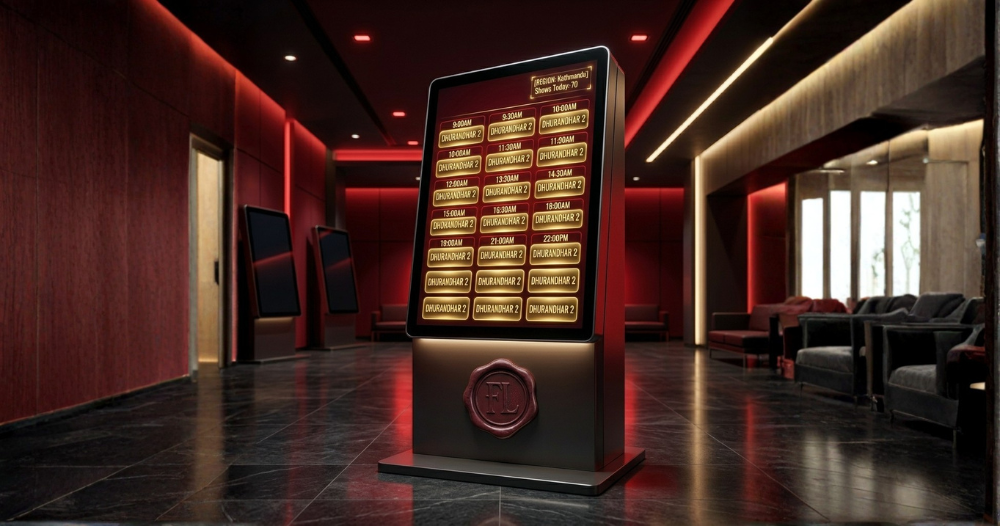
But for Dhurandhar 2, the producers demanded, and got, something unprecedented: A Total Monopoly. * The Data:In major hubs like Kathmandu’s QFX or Mumbai’s PVR-Inox, for the first 7 days, there was essentially nothing else to buy, very limited shows for other movies * The Result: On Wednesday, March 26, the film was still running 20,352 shows across India. That isn’t a release; that’s a hostile takeover of the national leisure time.
2. The Death of the “Filler” Movie
Multiplexes used to rely on “filler” content, medium-budget films that kept the popcorn machines warm between big releases. But the Solo Ride has proven that a single, high-velocity “Titan” can generate more revenue in one day than five smaller films can in a month.
The Math: Dhurandhar 2 earned ₹1007 cr globally in 7 days. * The Shift: Exhibitors are realizing that “Screen Sharing” is actually a leak in their bucket. If you have a product that people are willing to sit in for 4 hours, why waste a single seat on anything else?
3. The Management Lesson: Dedicated Sprints
In Scrum, we don’t like “Context Switching.” If a developer is working on a critical feature, you don’t ask them to “just quickly fix” five unrelated bugs. You give them a Dedicated Sprint.
The film industry has finally adopted the Dedicated Sprint, or Dhurandhar 2 may have set the trend, yet to see. By clearing the “impediments” (other movies), they allowed the audience to focus entirely on one narrative.
No Clashes.
No Ego Wars.
No Choice. And ironically, the audience loved it. We didn’t have to plan our lives around complex show timings. If you showed up at the theater, Dhurandhar 2 was playing. Period.
4. The Future: Is “Variety” a Legacy Concept?
This success has created a dangerous precedent. If every “A-List” superstar now demands a Solo Ride, what happens to the small, experimental film? Are we moving toward a future where theaters only exist for “Events,” and everything else is “Evicted” to OTT?
The Flix Verdict:
The Solo Ride is a “High-Yield” strategy, but it’s a high-stakes one too. Multiplexes are currently addicted to the ₹100cr-per-day highs of Dhurandhar 2. But once the “Titan” leaves the building, they’ll find a very empty lobby.
The Solo Ride didn’t just break records; it broke the multiplex business model. The “Shared Screen” era is officially in the legacy bin.
FL Community, did you enjoy the “No-Choice” experience at the theaters this week, or did you miss having options? Is the Solo Ride the only way to save the Big Screen?